
Here is how to choose a med spa marketing agency: ask who turns the inquiries into appointments. Have the agency explain the whole route: the offer, the ad, the inquiry, the booking and the report you receive. Then compare proposals on the outcome you pay for: a lead, a booked consult or a new patient.
Compare agencies on the job you need done, not just the monthly fee. A clinic that needs better follow-up has a different problem from a clinic with no inquiries at all.
Start with the gap in your current setup
Look at the last group of new-patient inquiries you can trace. Where did they come from? How many chose a time? How many attended? How many became paying patients?
If you cannot answer those questions, make measurement part of the scope. If you can, use the biggest gap to write a short brief for the agency. "We need more bookings from Instagram inquiries" is more useful than "we need better marketing."
Then ask these seven questions. Keep the answers together so you can compare proposals on the same basis.
1. What work will you actually deliver?
Ask for the responsibilities in plain language. Who chooses the front-end offer, meaning the first service a new patient is invited to book? Who produces and edits the ad creative? Who runs the campaign? Who answers the inquiries, and who handles questions that need a clinician?
An agency that manages ads is not automatically taking responsibility for the booking flow. Both arrangements can make sense. The important thing is knowing what your team still owns.
Ask to see the handoff points. If an inquiry arrives while the front desk is busy, what happens next? Speed matters here. In one study that measured phone calls to web form leads, the odds of reaching a lead fell by over 10 times within the first hour (InsideSales.com and MIT, 2007).
2. What counts as the result we are paying for?
A lead, a booked consult, an attended appointment and a new paying patient are four different outcomes. Ask which one appears in the report and which one triggers a fee.
If the proposal is performance-based, clarify how duplicates, cancellations, reschedules and no-shows are handled. Do not assume that "pay per appointment" means "pay only when a patient attends." Our checklist on pay per lead versus pay per booked consult walks through what each billing model rewards.
At Ryder Scale, a qualified booked consult means a date and time chosen with a card on file. That is a booking definition, not a promise that the person will attend, buy a treatment or be clinically suitable. Clinical decisions stay with the clinic.
3. Can we inspect the evidence behind the results?
A percentage on a slide is not enough context. Ask for the reporting period, the spend, the starting point and the number of bookings behind it. Check whether the result came from a similar offer and market.
If the agency is offering a pilot because it does not yet have comparable case studies, it should say so. Then assess the proposed test, reporting and limits on your commitment. A demonstration should be labelled as a demonstration, not presented as a patient conversation from a successful client.
4. Who handles the inquiry after someone clicks?
Walk through a realistic question such as "What does this offer include?" Then ask what happens when someone wants a time, changes their mind or asks a clinical question.
If AI is involved, find out which conversations it can enter, what information it uses and how it hands off to your team. An assistant limited to one ad offer has a different scope from a tool managing the whole inbox. Our guide to AI receptionists for med spas covers where that line should sit.
Ask for a booking-flow demonstration using test information. Do not share private patient conversations just to evaluate a sales pitch.
5. What is included in the total cost?
Compare the same scope across proposals: creative production, campaign management, media budget, software, booking work and any additional charges. A lower management fee does not settle which arrangement costs less per useful outcome. The total matters. The average med spa puts about 7% of its revenue into marketing (AmSpa, 2025).
Ask how billing is reconciled with the actual booking records. Use our med spa marketing ROI guide to separate cost per lead from cost per booked consult and cost per new patient.
6. Which assets and access remain with the clinic?
Confirm who controls the ad account, business profiles, creative files, landing pages and reporting. Ask what happens to each when the engagement ends.
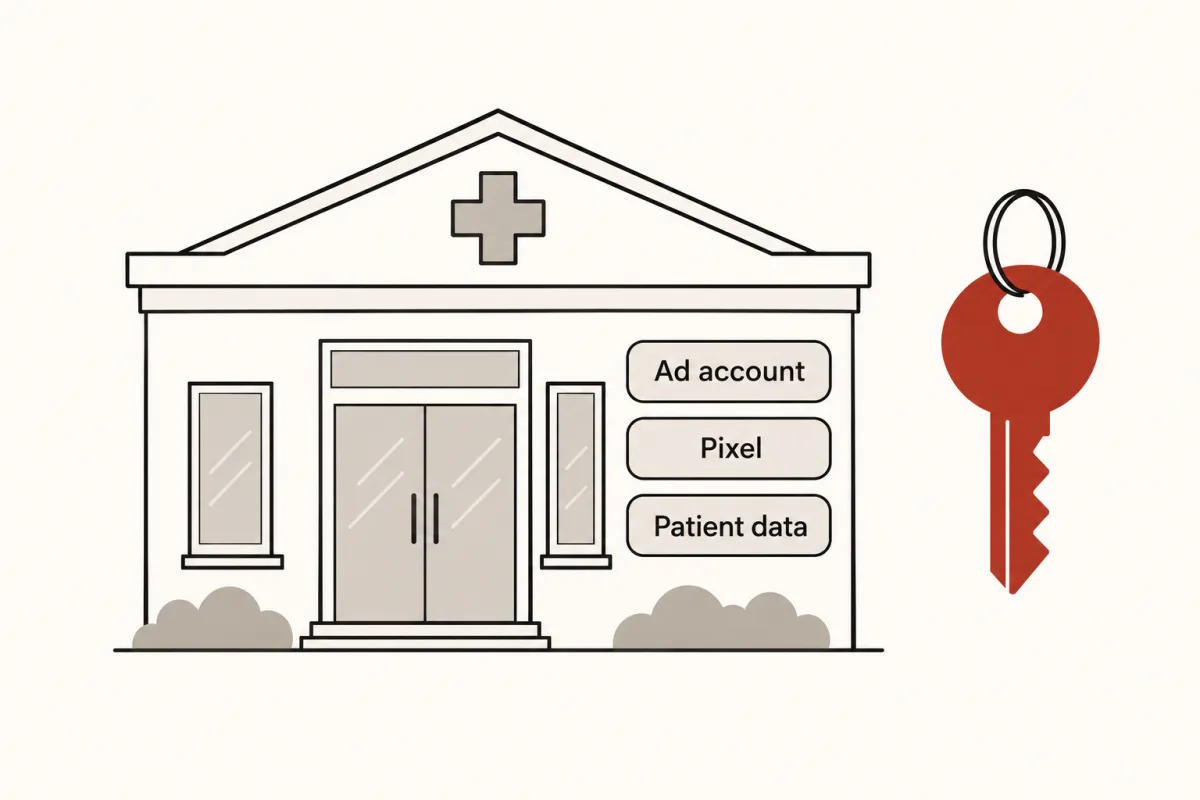
Have the provider explain the access it needs and the offboarding process. It should also explain how it handles patient information and which integrations have actually been tested. A logo on a website is not enough to establish compatibility with your clinic's setup.
7. How will we decide whether to continue?
Write down the offer being tested, the available appointment capacity, the spending limit, the reporting cadence and the outcomes you will review. Agree on how incomplete bookings and later attendance will be recorded.
A short test can reveal problems in the ad-to-booking flow. It does not guarantee that a small sample will establish a stable acquisition cost, meaning the cost to win each new patient. Ask what evidence would justify expanding, changing or stopping the campaign.
How to choose a med spa marketing agency: the checklist for the call
- A clear list of deliverables and responsibilities.
- A written definition of the outcome being billed.
- Evidence with dates, spend and sample sizes.
- A working example of inquiry handling and booking.
- A complete view of cost, access and offboarding.
- A test plan that matches the clinic's capacity.
Frequently asked questions
How much does a med spa marketing agency cost?
It depends on the scope and the billing model. Some agencies charge a monthly retainer for managing ads, with the clinic paying the ad platform separately. Others charge per lead or per booked consult. Ask for the full picture: management fee, creative, software, media budget and booking work. Then compare the all-in cost per booked consult, not the headline fee.
Should a med spa hire an agency or run ads in-house?
It depends on who will do the work each week. Running ads in-house means someone on your team writes the creative, builds the campaign, watches the spend and answers the inquiries. If that person already runs the front desk, the inquiries are the first thing that gets missed. An agency makes sense when you want those jobs owned by someone whose only job is that flow.
What is the difference between pay per lead and pay per booked consult?
A lead is a person who showed interest, such as a form submission or a first message. A booked consult is a person who chose a date and time. Paying per lead rewards the agency for volume. Paying per booked consult rewards it for people who got as far as the calendar. Neither model promises the person will attend, so agree on how no-shows and cancellations are recorded.
The right choice depends on the problem you need solved. If you want a medical spa marketing agency to manage Instagram and Facebook ads for one front-end offer, Ryder Scale handles the ad creative and campaign. Its AI booking support is limited to conversations from those ads. The rest of the inbox stays untouched. If you are still comparing routes, start with our guide to Instagram ad destinations. You can book a free 20-minute audit to walk through whether that scope fits your clinic. There is no retainer, and you only pay us per qualified booked consult.