Instagram ads for med spas should send the click to the route your team can actually cover. The ad can open a lead form, send the person to a landing page or start a direct-message conversation. Each route creates a different job for your booking team, so decide this before you finish the creative (the ad's images and words).
There is no universal winner. Choose the route around one clear front-end offer (the first offer a new patient sees), the explanation it needs and the way inquiries will be handled. The audience is there to reach. 55% of US women use Instagram, compared with 44% of men (Pew Research Center, 2025). And 89% of med spa patients are women (AmSpa, 2024).
Three routes for Instagram ads for med spas
| Route | What the visitor does | What your clinic needs ready |
|---|---|---|
| Lead form | Submits information inside the platform | A clear next step and a process for contacting and booking the person. |
| Landing page | Opens a website page about the offer | A fast mobile page, enough information to make a decision and a working booking route. |
| Click-to-DM | Opens a conversation with the business | Coverage for questions, a bounded response process and a path into the calendar. |
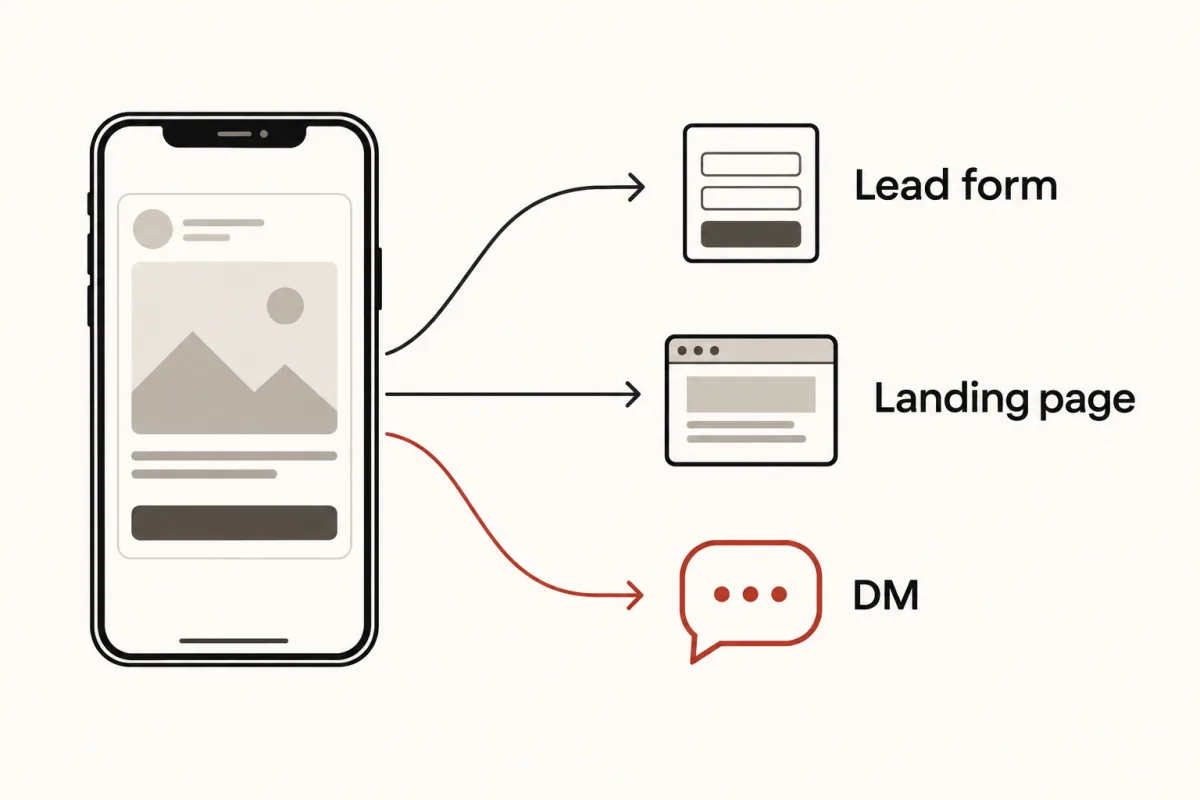
Meta describes ads that click to Messenger as Facebook, Instagram or Messenger ads that send people into a Messenger conversation with your business. See Meta's page on ads that click to Messenger. Available destinations and settings depend on the account and campaign, so check the current options before building the flow.
When a lead form makes sense
A form can suit an offer where the next step is a staff callback or a separate consultation process. It gives you a defined submission to route into follow-up.
The practical question is what happens next. Does someone contact the person during covered hours? Can they answer questions and offer a time? Is the person told to expect that contact?
Judge the full process. A low cost per form submission can be useful, but compare its booked and attended consults before deciding it is your best route.
When a landing page makes sense
A landing page gives you room to explain the offer, introduce the clinic, answer questions and show substantiated evidence. It can work well when people need more context before choosing a next step.
Keep the promise in the ad consistent with the page. If the ad promotes one new-patient offer, make that offer easy to find. Check the experience on a phone, including the booking system and any handoff to another site.
Do not assume adding another page creates better-qualified inquiries. Check the actual results and where people stop progressing.
When click-to-DM is worth testing
A DM route is worth considering when someone can understand the offer quickly but wants a short exchange before choosing a time. Questions about what is included, location and availability can fit naturally into a conversation. People already shop this way. Meta says 600 million chats happen between people and businesses every day on its apps (Meta for Business, 2026).
Opening a conversation is not the same as having a booking system. You still need accurate answers, available appointments and a clear handoff when a question falls outside the flow. Our med spa DM scripts give approved replies to the 20 questions people ask most.
For a clinic already running lead-form or landing-page campaigns, this can be a separate test alongside them. It does not require treating the existing campaigns as failures. Our guide to click-to-DM ads for med spas covers what they are and when to use them.
Build the flow around one front-end offer
Start by writing down what the offer includes, the price the clinic has approved, who it is intended for, the location and the appointment type. Include any material conditions that a prospective patient needs to understand.
Then map the operational journey:
- The ad introduces the offer and the next step.
- The conversation answers non-clinical questions about that offer.
- The person selects an available date and time.
- The booking is confirmed through the clinic's approved process.
- Questions outside the flow go to the clinic team.
The booking flow should not diagnose, decide treatment suitability or promise a clinical outcome. Those decisions belong with the clinic's qualified professionals.
Keep AI's role specific
An AI receptionist does not need to take over your entire inbox to support this route. In Ryder Scale's proposed setup, it handles conversations started through our ads, using information for that one front-end offer. Other inbox conversations stay untouched. Our guide to AI receptionists for med spas explains where that boundary sits and why.
Before launch, test offer questions, unavailable slots, rescheduling requests and questions that need human attention. Confirm the connection to the booking system and the handoff behavior in your actual setup. A polished example conversation is not proof that every unusual case works.
Ryder Scale handles the ad creative and campaign as part of that managed flow. You are not being asked to become an ad editor or assemble a collection of tools yourself.
Compare booked outcomes, not just cheaper inquiries
Keep the offer and audience comparable when you test routes, and document meaningful differences in the setup. Report cost per inquiry, cost per booked consult and later attendance separately. Include relevant management and operating costs in an all-in comparison.
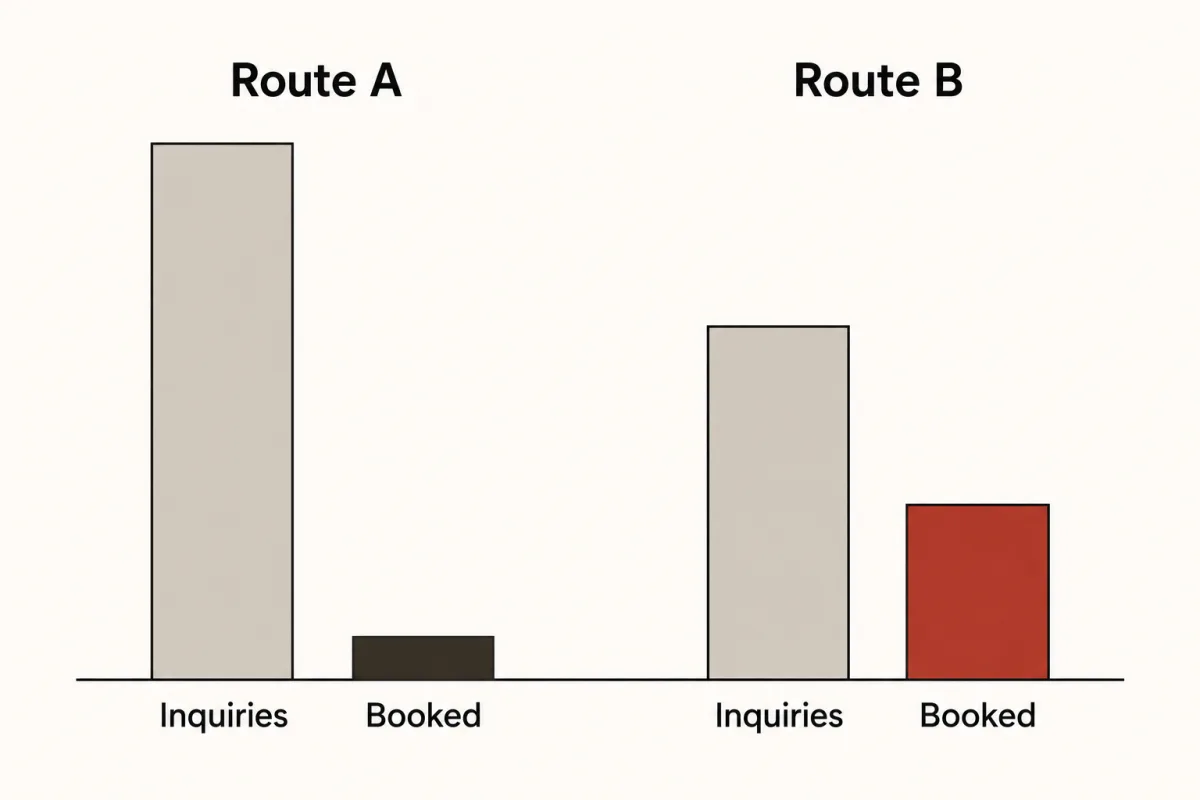
Click-to-DM may produce cheaper inquiries in a particular test, or it may not. Lower cost per inquiry also does not guarantee lower cost per paying patient. Our med spa marketing ROI guide shows the calculation and the distinction.
Before you launch
- Confirm the offer and all patient-facing information with the clinic.
- Review the current platform requirements for the proposed ad and messaging setup.
- Test the full mobile journey with test information.
- Check calendar capacity, confirmations and human handoffs.
- Set a spending limit and define the outcomes you will review.
Frequently asked questions
Do Instagram ads work for med spas?
They can bring in new-patient inquiries when the ad promotes one clear offer and someone is ready to answer the people who respond. Whether they work for your clinic depends on the offer, the price, your market and how fast inquiries are handled. Judge the ads on booked and attended consults, not on likes or on the number of people who clicked.
What should a med spa Instagram ad say?
Lead with one front-end offer: what it is, who it is for and what the next step is. Say the price if the clinic has approved it, and keep every claim to things the clinic can back up. Avoid promising a result from a treatment. The ad's job is to make the next step obvious, whether that is a form, a page or a message.
Should my Instagram ad send people to a landing page or a DM?
Send people to a landing page when the offer needs explaining before anyone will act. Send them to a DM when the offer is easy to grasp but people want a quick exchange before choosing a time. The deciding factor is who answers. A DM route only works if every message gets an accurate reply and a path into the calendar during the hours people are asking.
How much should a med spa spend on Instagram ads?
Start with the number of new consults your calendar can actually take in a month, then set a spending limit you can afford to lose while you test. Ad spend goes to Meta directly. Agency fees, creative and software sit on top of it, so budget for the all-in cost. Raise spend only after the booked-consult numbers from the first test hold up.
If you are comparing providers, use our med spa agency checklist to ask who owns each part of the flow. Or book a 20-minute audit to explore an offer-specific DM test for your clinic: there is no retainer, and you only pay us per qualified booked consult.