
When you compare pay per lead vs pay per appointment med spa pricing, the deciding question is what event triggers a fee. A lead is a name. A booked consult is a date and time on your calendar. Pay for the outcome you can check in your own booking system, and get the definition in writing before you sign.
Most med spa lead generation agency pricing falls into one of four models. The first is a flat monthly retainer, a fixed fee paid whether or not anything books. The others are a fee per lead, a fee per booked consult, or a fee per attended consult. Each one changes what the agency works hard on. This checklist covers the four outcomes, the questions that expose weak definitions, and how to check invoices.
The four outcomes an agency can bill on
An agency can charge you at four points: the lead, the booked consult, the attended consult, or the paying patient. Each one is further down the path and harder to fake.
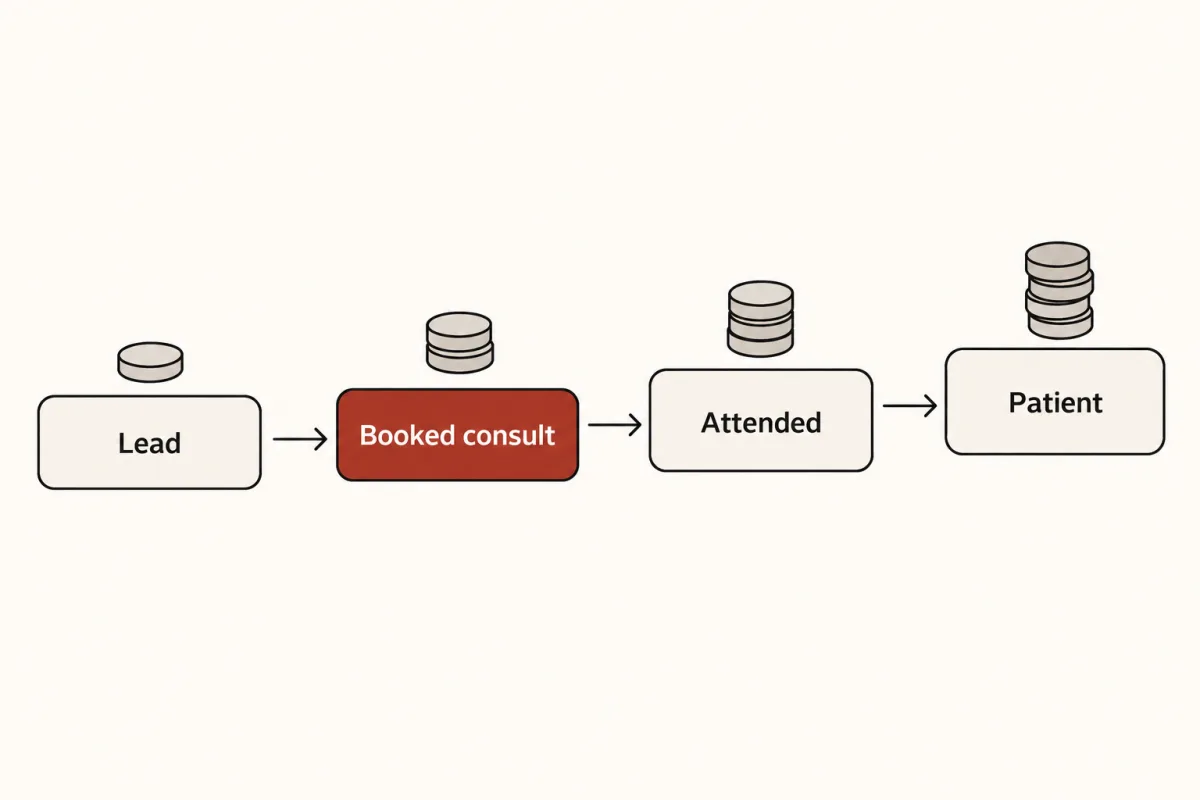
- Lead. A person who showed interest. They clicked an ad, filled in a form, or sent a message. You have a name and a way to contact them.
- Booked consult. A person who chose a date and time. The appointment sits in your booking system.
- Attended consult. A person who walked through the door and sat down with your team.
- Paying patient. A person who bought a treatment after the consult.
The billing trigger matters because the agency gets paid at that point and no later. If the fee lands on the lead, the agency is done once the form is filled. Whether that person answers the phone is your problem. Speed matters too. In one study that measured phone calls to web form leads, the odds of qualifying a lead dropped 21 times when the first call came at 30 minutes instead of 5 (InsideSales.com and MIT, 2007). If the fee lands on the booked consult, the agency has to carry the conversation to a time slot. It still does not control whether the person shows up.
Few agencies bill on the paying patient, because your consult, your pricing and your provider's judgment decide that outcome. So the real pay per lead vs pay per appointment med spa choice sits between the first two triggers, with attended consult as a rarer third.
How pay per lead vs pay per appointment med spa models compare
The models differ on who carries the risk of a wasted slot and what the agency is pushed to optimize. A no-show is a person who books but does not arrive. Across 105 studies of health care visits in general, not med spas, the average no-show rate was about 23% (Health Policy, 2018). Our guide to cutting no-shows with a card on file shows how clinics protect those slots.
| Model | What triggers a fee | Who carries no-show risk | What the agency is motivated to do | What to verify |
|---|---|---|---|---|
| Monthly retainer | The month ending, whether 2 or 50 people book. | You | Keep you as a client. Report activity. | What the fee covers, and what happens in a month with few bookings. |
| Pay per lead | A form, message or call from a new contact. | You | Produce as many contacts as possible at the lowest cost. | How duplicates and junk contacts are removed before the count. |
| Pay per booked consult | A date and time placed on your calendar. | You | Turn conversations into appointments. | What "booked" includes: card on file, confirmation, qualifying questions. |
| Pay per attended consult | A person who arrives for the appointment. | The agency | Book people who will show up, and chase confirmations. | How attendance is reported back, since the agency depends on your records. |
A retainer fits when you want a long-term partner on brand and content. The other three are forms of performance based med spa marketing, where the agency carries some of the risk of a bad month. Our guide to how much a med spa should spend on marketing covers budgeting under each model.
Definitions to pin down in writing
Every billable word in the contract needs a plain definition. Most pay per lead vs pay per appointment med spa disputes come from one of these six words.
- Duplicate. The same person inquiring twice, or booking twice. Is that one fee or two? How is "same person" matched: phone, email, Instagram handle, or all three?
- Cancellation. A booked consult the person cancels before the date. Is the fee refunded, credited, or kept?
- Reschedule. A booked consult moved to a new date. Is that one booking or two? What if the person moves it three times?
- Card on file. A payment card saved to hold the slot. Does the booking count without one? Who holds the card details, and in which system?
- Qualified. The agency's word for a person who passed its screening questions. Which questions? Can you see the answers?
- Booked. The exact moment the booking counts. Is it when the person says yes in a message, or when the appointment appears in your booking system with a time?
At Ryder Scale, a qualified booked consult means a date and time chosen with a card on file. The AI receptionist writes it into the clinic's booking system, so you can find it yourself. That is a booking definition, not a promise that the person will attend, buy a treatment or be clinically suitable.
How to reconcile invoices with the calendar
Check every invoice line against your own booking records, not the agency's dashboard. Reconcile means matching the invoice to your records one line at a time.
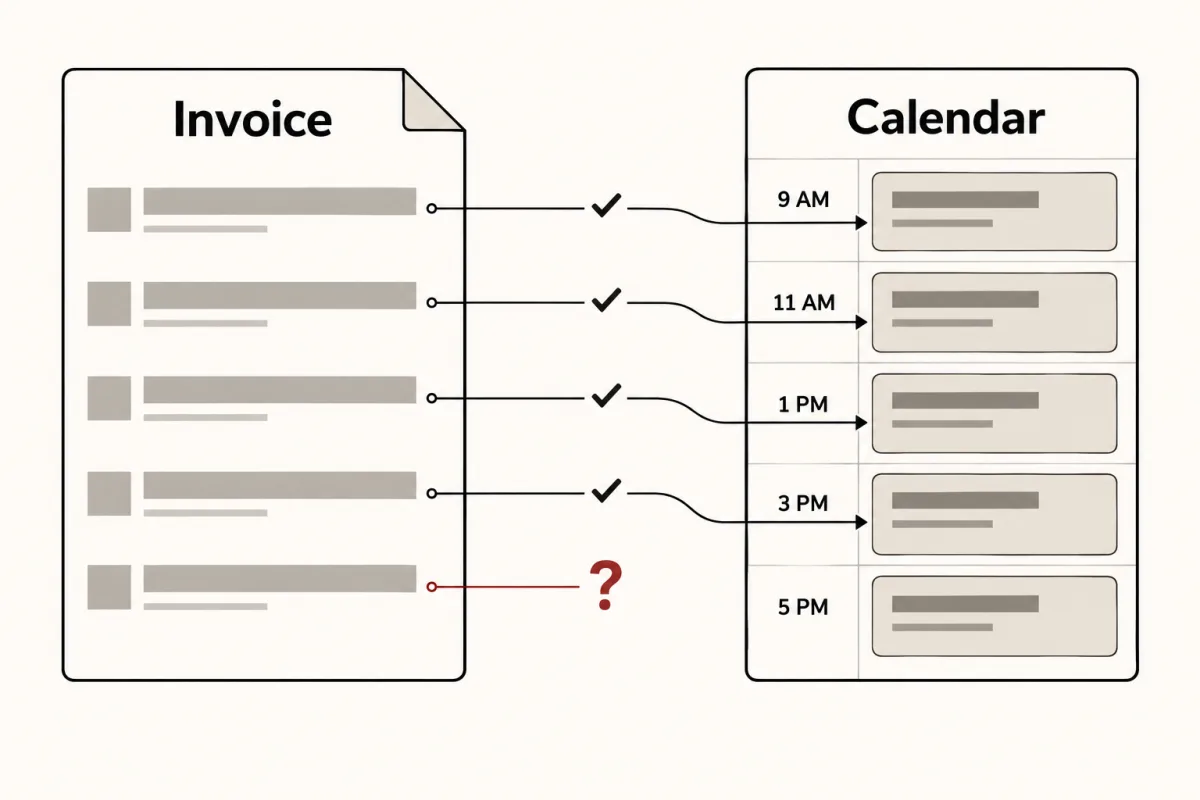
- Ask the agency for an itemized list of each billed booking: name or ID, booking date, appointment date, and source campaign.
- Open your booking system (Boulevard, Zenoti, Vagaro, Mindbody, Aesthetic Record, Square or whatever you use) and find each one.
- Mark any booking you cannot find. Those come off the invoice.
- Mark duplicates, cancellations and reschedules, and apply the written definitions you agreed on.
- Record attendance and purchase for each booking in a separate column. You need this to judge the model.
- Send the marked-up list back before you pay.
Keep this list month over month. Over time you will know your real cost per booked consult, attended consult and paying patient. Our guide on tracking med spa marketing ROI shows how to set up those numbers.
Red flags in performance based med spa marketing
The clearest warning sign is an agency that cannot say, in one sentence, what event triggers a fee. Here are the others.
- The agency controls the count. If bookings are counted in the agency's dashboard and not your system, you are trusting the people who get paid per count.
- "Booked" means "said yes in a chat." A message that says "sure, Tuesday works" is not an appointment until it has a time slot in your system.
- Cancellations billed in full with no credit. Some cancellation risk is fair to share. Zero refund on a cancel an hour after booking is not.
- A "qualified" label you cannot inspect. If you cannot see the screening questions and the answers, the word means nothing.
- Promised booking volumes. No agency controls what ads will cost next month. A promised number is a sales line.
None of these means the agency is dishonest. They mean the contract is loose, and loose contracts favor the party that writes the invoice.
Frequently asked questions
Is pay per lead ever the better choice for a med spa?
Yes, when your front desk is strong and fast at follow-up. If your team calls every new contact within minutes and books most of them, paying for leads can cost less per consult than paying for bookings. The model fails when leads sit unanswered. Count how long your inquiries wait before anyone replies, then decide.
Does pay per booked appointment marketing mean I only pay when the patient shows up?
No. A booked appointment is a date and time on the calendar. Attendance is a separate outcome. Some agencies bill on attended consults, and that is a different model with a different price. Read the definition of "booked" in the contract. If it does not mention attendance, you are paying for the booking whether or not the person arrives.
Who pays for the ad spend in a pay per booked consult model?
It depends on the agency. Some bundle media spend into the per-booking fee. Others have the clinic pay the ad platform directly and charge only for bookings. Ask which one applies, and ask who owns the ad account. At Ryder Scale, the clinic pays Meta directly for ad spend, and our fee is only the per-consult charge.
The pay per lead vs pay per appointment med spa decision comes down to one test. Pick the trigger you can verify in your own calendar, with definitions you can hold the agency to. Bring these questions to every pricing call, alongside our checklist for choosing a med spa marketing agency. Ryder Scale runs Instagram and Facebook click-to-DM ads (ads that open a direct message, not a web page) for one front-end offer (the single offer the ad promotes) per clinic. An AI receptionist books consults from those ads into your booking system. There is no retainer and no setup fee. You pay per qualified booked consult. Read how Ryder Scale works with clinics, or book a free 20-minute audit to see whether that scope fits your clinic.