A medical spa marketing plan works best when it is built around one new-patient offer. Pick the single treatment you want more strangers to try. Write down who it is for, where the ad sends them, who answers, and how a consult gets booked. Put all of it on one page and review that page every week.
Most clinics do not run short of marketing ideas. They run short of focus. Five ideas run at once, nobody owns any of them, and the month ends with a bill and no lesson. This guide gives you a one-page med spa marketing plan template and fills it in for a made-up clinic.
Why one offer beats a full menu
One offer beats a menu because a stranger scrolling past your ad cannot choose between twelve treatments. They can say yes or no to one.
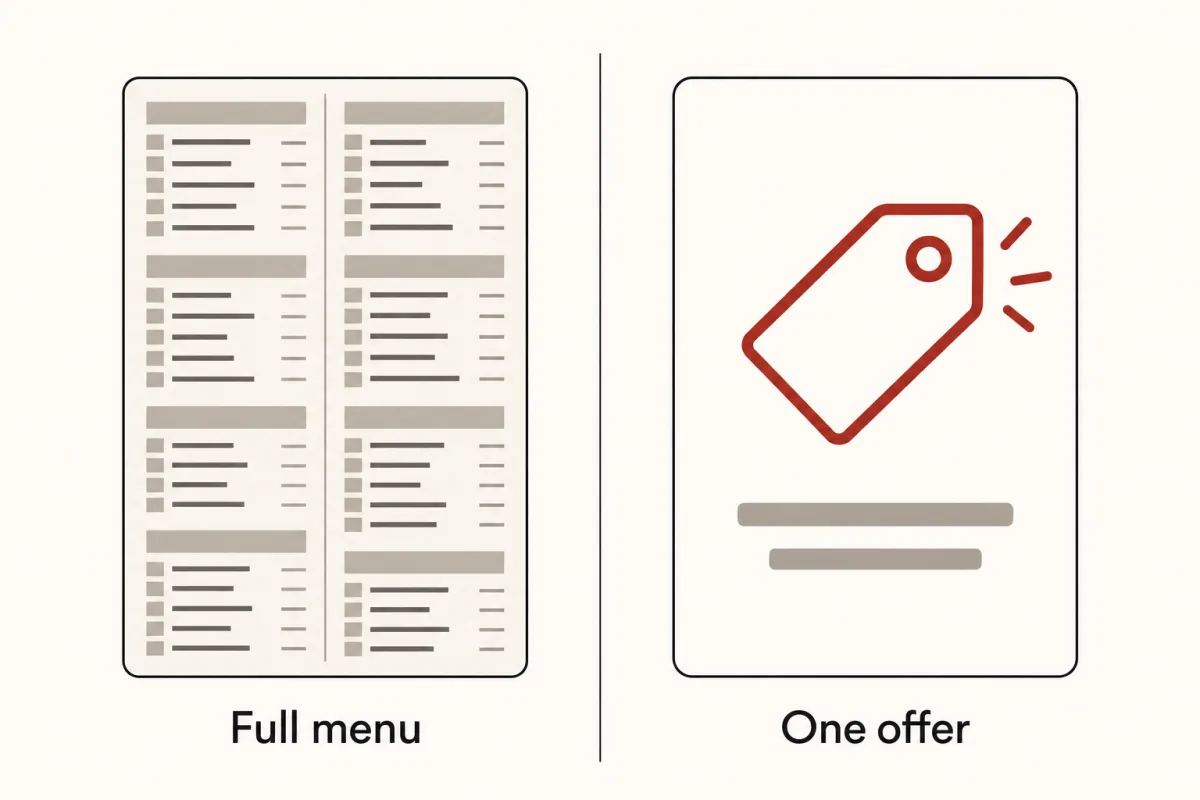
A menu ad makes the reader guess which treatment fits them and what it costs. Most keep scrolling. A single offer also makes the numbers readable. When the ad, the reply and the booking all point at one thing, you can see which step is leaking.
You still sell the whole menu inside the consult, to a person who already walked in. The front-end offer (the thing a new patient books first) gets them through the door. The rest of your marketing, from referrals to email, works on people who already know you. Our list of med spa marketing strategies covers those other channels.
The medical spa marketing plan template, on one page
The whole med spa marketing plan fits in a ten-row table. Fill in the right-hand column this month.
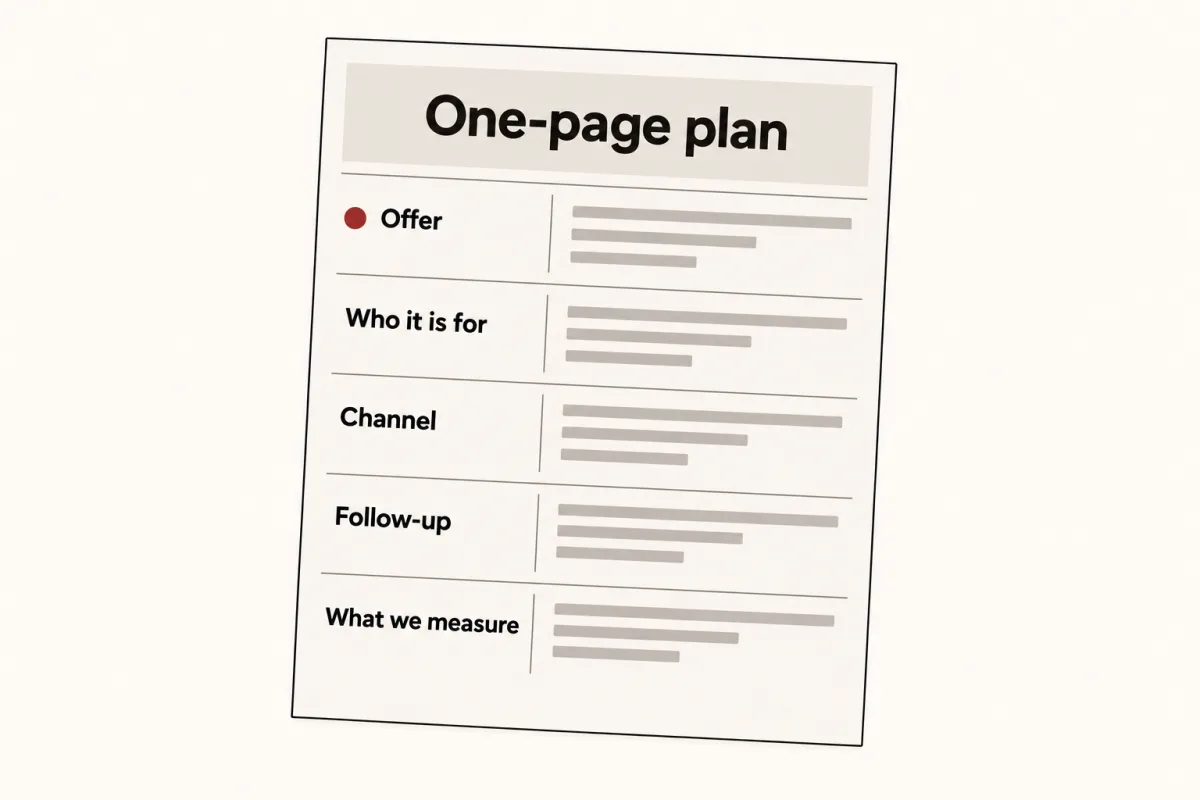
| Row | What to write down |
|---|---|
| Goal | One number for one month. Booked consults, not clicks. |
| Front-end offer | One treatment, what it includes, and how the price is shared. |
| Who it is for | The person in one sentence: age, concern, distance. |
| Capacity | How many new consults you can take. |
| Creative responsibilities | Who films, who writes, who edits, who approves claims. |
| Where the click goes | DM (a direct message on Instagram or Facebook), lead form or landing page. One destination only. |
| Who answers inquiries | A named person or tool, a backup, a reply-time target. |
| Booking rule | What counts as booked, and what gets handed to a clinician. |
| Budget and limit | Daily spend, monthly cap, and the pause rule. |
| What you review weekly | Spend, inquiries, booked, attended, bought. |
Walking the plan row by row
Each row below is filled in for a hypothetical clinic called Northside Aesthetics: two injectors, one laser, one front desk. It is invented. Its numbers are examples, not benchmarks or client results.
Goal
Northside writes "20 booked consults for the laser hair removal starter package in October." One number, one offer, one month. A goal you cannot count on a calendar is not a goal.
Front-end offer
The offer is a starter package: three sessions on one small area, with the price stated in the ad. Northside picks it because the laser sits idle on weekday mornings and the treatment leads to larger areas later. The owner checks the wording against state ad rules first.
Who it is for
"Women aged 25 to 45 within 15 miles who shave a small area every week and are tired of it." That sentence drives the video script, the ad targeting and the first reply. If that person would not stop on the ad, the ad is wrong. Writing for women makes sense for most clinics, since 89% of med spa patients are women (AmSpa, 2024).
Capacity
Two injectors and one laser give Northside about six open consult slots a week, so 24 for the month. The goal of 20 sits under that. Fix capacity first, then set the goal.
Creative responsibilities
The creative is the video or image plus the words in the ad. The owner films one 30-second phone video a week in the laser room and says the offer out loud. The manager writes the caption. An editor cuts and uploads it. One injector approves every claim before it posts.
Where the click goes
Northside sends the click to a DM. A landing page or a lead form are the other options. Each one changes who does the follow-up work. Our comparison of Instagram ad destinations for med spas walks through that choice.
Who answers inquiries
Northside names the front desk lead as first responder and the manager as backup, with a reply target of ten minutes during open hours. They also decide who picks up overnight messages at 8am. Speed matters here. In one study, the odds of reaching a web lead were 100 times higher when the call came within 5 minutes instead of 30 (InsideSales.com and MIT, 2007). That study looked at phone calls, but the same idea applies to DMs.
Ryder Scale runs an AI receptionist that replies only to DMs that start from the ads we run. It answers questions about that one offer, asks non-clinical qualifying questions and offers open times. It takes a card on file to hold the slot and writes the consult into the clinic's booking system. Anything outside that flow goes to the clinic team. The rest of the inbox is untouched.
Booking rule
Northside's rule: a consult counts as booked when the person has chosen a date and time and left a card on file. A "maybe Thursday" is not booked. Any question about whether the treatment suits a skin type or a medication goes to an injector, not to the front desk or a tool.
Write the rule down, because it decides what your weekly number means. Our definition is the same one: a date and time chosen with a card on file. It is a booking definition, not a promise that the person attends or buys.
Budget and limit
Northside sets $40 a day and a $1,200 cap for the month. It adds one pause rule: two full weeks of spend with zero booked consults, and the campaign stops until the owner has reviewed the offer and the conversations. These figures are a hypothetical example, not a benchmark. Your number depends on your margin per patient (what is left after the cost of the treatment) and your open capacity. Our guide to how much a med spa should spend on marketing shows the math. If you run ads with us, you pay Meta (the owner of Facebook and Instagram) directly for the ad spend.
What you review weekly
Every Monday, Northside writes five numbers: spend, unique inquiries, booked consults, attended consults, and patients who bought. Same definitions every week, so the trend is real. Our guide to tracking med spa marketing ROI explains how to keep those stages separate.
Where the other channels fit in the plan
The ten rows cover one channel: paid ads for one offer. A full marketing plan for an aesthetic clinic still needs the basics around it. Add one line for each at the bottom of your page, with a name next to it.
| Channel | Its job in the plan | When to start |
|---|---|---|
| Google Business Profile and reviews | Win people who already search for a clinic like yours | Before the first ad runs |
| Reminder texts | Help booked people show up | Before the first ad runs |
| Referrals | New patients sent by happy patients | After the first consults are done |
| Email to past patients | Bring people back for repeat treatments | After the first full month |
| Organic (unpaid) posts | Show people from the ad that you are real | Any time, a little each week |
Keep these basics out of the ad budget and out of the weekly ad numbers. Count them on their own lines. Our guide to med spa no-shows and card on file covers reminders and holding a slot. No-shows are common. Across 105 studies of health care visits in general, not med spas, the average no-show rate was about 23% (Health Policy, 2018).
Common ways a med spa marketing plan fails
- The goal is a feeling. "More patients" cannot be checked on a Monday. Write a number.
- Two offers share one budget. Neither gets enough spend to teach you anything.
- Capacity was never checked. Bookings arrive and the calendar cannot hold them.
- Nobody owns the reply. The DM sits for six hours. The person books elsewhere.
- The booking rule is loose. "Interested" gets counted as booked.
Each of these is fixed by filling in the row you skipped, not by spending more.
Frequently asked questions
How long should I run a med spa marketing plan before changing it?
Run the plan for a full month before changing the offer or the audience. Shorter than that and the sample is too small to tell signal from noise. Within the month, fix operational problems right away: a slow reply, a broken link, a confusing price. Those are not plan changes. They are repairs.
Can I run two offers at the same time?
You can, but only if each one has its own budget, its own capacity and its own weekly numbers. For a small clinic that doubles the admin and halves the learning. Start with one. Add a second once the first is booking steadily and you have a clear reason for it.
Do I need an agency to run this plan?
No. Every row can be owned by someone on your team. The honest question is who answers inquiries within minutes, seven days a week, and who edits new creative every week. If nobody inside the clinic can own those two rows, that is where outside help earns its place.
What if the ad gets inquiries but nobody books?
Read the actual conversations first. The gap between inquiry and booking sits in the reply more often than in the ad. The reply is too slow, too vague about price, or takes too many steps to pick a time. Fix the reply before touching the ad. Then check whether the offer is what the reader expected when they clicked.
Write the ten rows this week and run them for a full month. If you want someone to own the creative, the ads and the DM reply for one offer, that is what Ryder Scale does as a med spa marketing agency. There is no retainer and no setup fee. You pay per qualified booked consult. Our comparison of pay per lead and pay per booked consult explains that difference. Book a free 20-minute audit to see whether one offer fits your clinic.