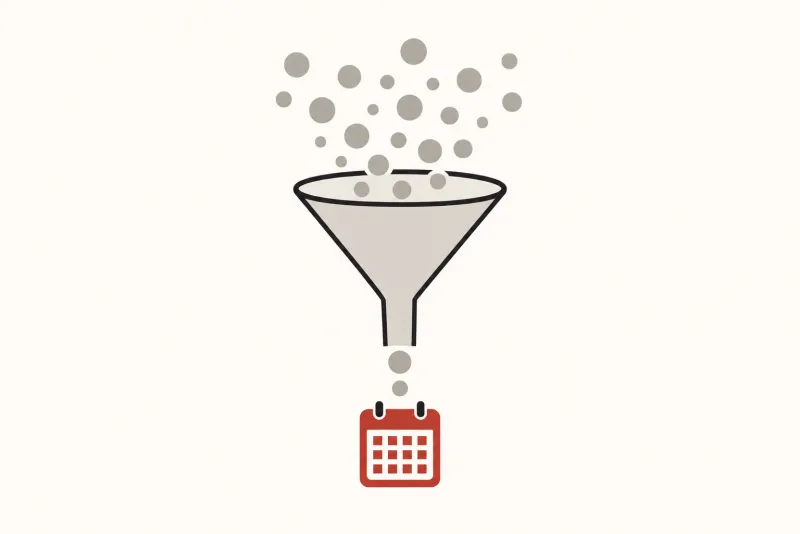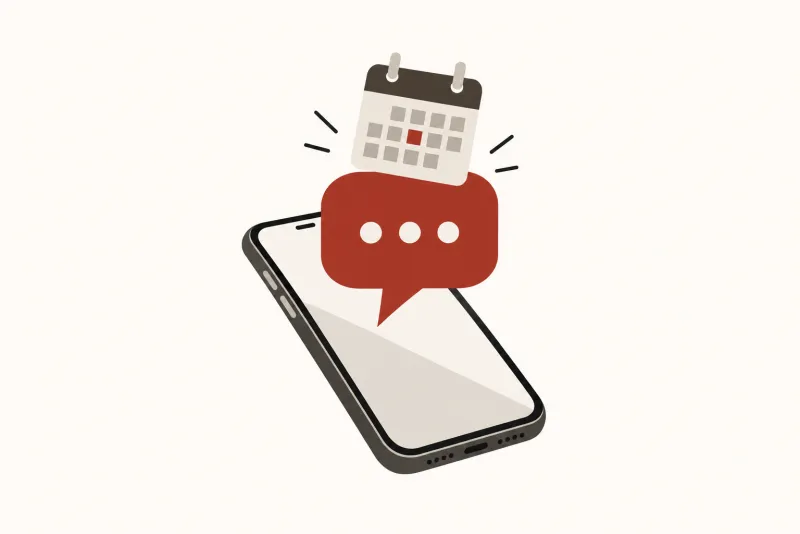
Medical spa marketing strategies lead to booked consults when every channel points at one offer and one next step: choose a time. Pick a single front-end offer. Run Instagram and Facebook ads that open a conversation. Keep your Google Business Profile and reviews current. Use email, text messages and referrals to bring patients back. Measure consults, not followers.
Each section below covers one channel and links to a deeper guide where one exists.
What is medical spa marketing?
Medical spa marketing (or med spa marketing) is everything a clinic does to find new patients and bring past patients back. It covers paid ads, your Google listing, reviews, email, text messages, referrals and the posts you share. It also covers a step many owners skip: what happens after someone asks a question.
That step is where a lot of ad money gets wasted. A person sees an ad, sends a message and waits. If nobody answers fast with a price and a time, that person often books somewhere else. So good marketing has two halves:
- Getting attention. The ads, listing, reviews and posts that make the right person stop and ask.
- Turning a question into a booking. A fast reply, a clear price and an easy way to pick a time.
This guide covers both halves. It judges every channel by one result: a booked consult.
Why booked consults are the measure of med spa marketing strategies
A booked consult is the first result that can turn into revenue, so judge each channel on it. Followers do not pay for treatments. A lead (a name and a phone number, or a message) does not either. A booked consult is a person who chose a date and time.
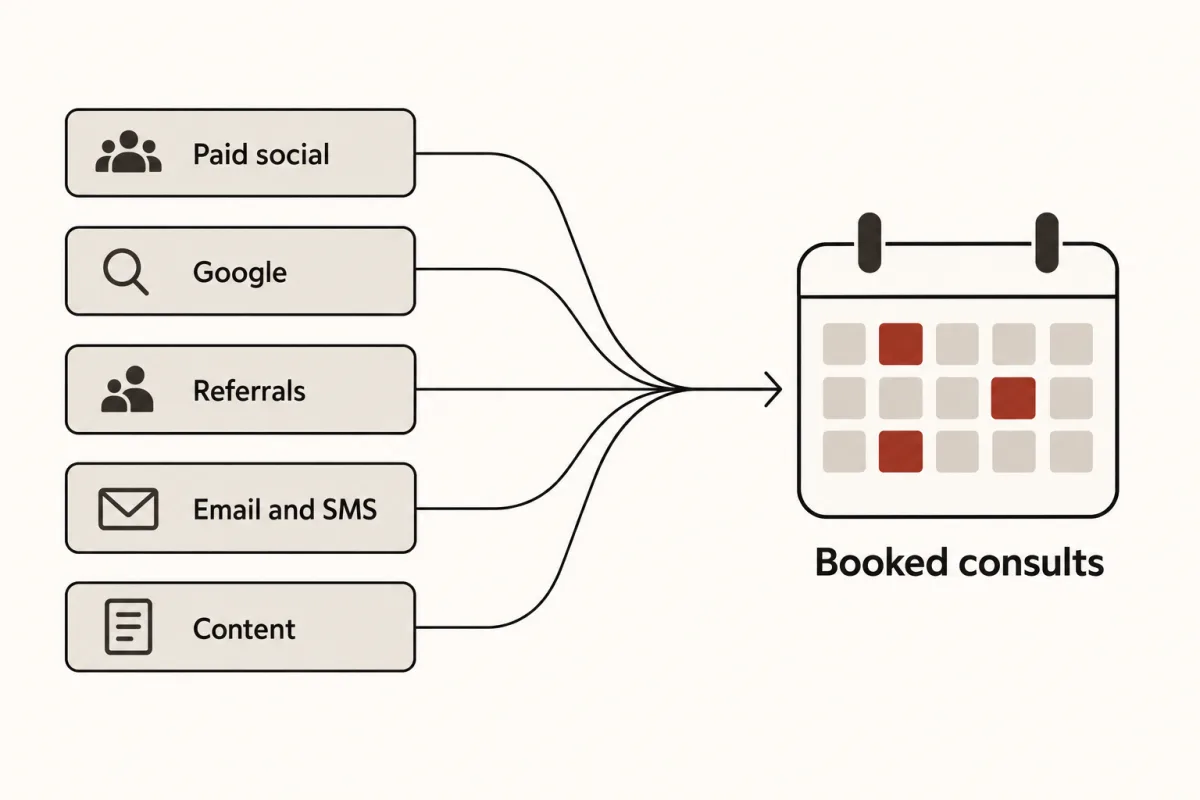
At Ryder Scale we use one definition: a date and time chosen with a card on file. That is a booking definition. It is not a promise that the person attends, buys or is clinically suitable. Those steps stay with your clinic.
Pick one front-end offer before you pick a channel
Start with one offer, because every channel below works better when it has one clear thing to sell. A front-end offer is the first thing a new patient books. It fits in one sentence, has a price a stranger can say yes to, and leads to a treatment you want more of.
Examples: a lip filler consult with the price shown, or a first laser hair removal session for one area. Pick the one your team delivers well and your calendar has room for. Most med spa marketing strategies fail here, because the clinic tries to promote everything at once.
One offer also makes measurement easy, because every consult traces back to the same thing. Our med spa marketing plan guide shows how to write this choice down before you spend.
Paid social: Instagram and Facebook ads
Paid social is the fastest way to put one offer in front of new people in your area. 55% of US women use Instagram, compared with 44% of men (Pew Research Center, 2025). The common mistake is buying ads before deciding where the click should land.
The three places a click can go
- A landing page. The person reads, then fills a form or books through your software.
- A lead form. The person sends a name and phone number inside the app. Fast, but your team has to call back.
- A direct message (DM). The ad opens a chat in Instagram or Messenger. The person asks a question and gets an answer in the same place.
Each route puts the booking work somewhere different: on the page, on your front desk, or on whoever answers the inbox. Our guide to Instagram ad destinations compares all three, and click-to-DM ads for med spas covers the DM route alone.
This is the part Ryder Scale does. As a medical spa marketing agency, we create and run Instagram and Facebook ads for one front-end offer per clinic, and the ad opens a DM. An AI receptionist replies to DMs from those ads only. It answers questions about the offer, asks non-clinical qualifying questions, offers times and takes a card on file to hold the slot. Then it writes the consult into your booking system. Anything else goes to your team, and the rest of your inbox is untouched.
Budget depends on your consult capacity and the offer price. You pay Meta directly for ad spend. How much a med spa should spend on marketing shows how to set that number.
Google Business Profile, local search and reviews
Your Google Business Profile is the free listing that appears when someone searches "med spa near me," and it is the second channel to fix. Claim it, confirm the hours, add your services and real photos, and post the front-end offer as an update.
Reviews feed this listing. Ask every happy patient for one at checkout, with a link or a QR code. Reply to every review, good or bad, in a calm and short way, and never mention the patient's treatment. Reviews sway real choices. Of people who looked up doctor ratings in the past year, 35% picked a doctor because of good ratings (JAMA, 2014).
Local search builds over months, but people who find you this way already want the service.
Email, SMS and memberships: retention, not acquisition
Email, text messages (SMS) and memberships bring existing patients back, so treat them as retention channels, not ways to find new patients. Retention means keeping the patients you have. Acquisition means finding new ones. Most of a med spa's patients already come back. 73% of patients are repeat patients (AmSpa, 2024).
Use email for a monthly note and reminders about treatments that need a repeat. Use SMS for appointment reminders. Get written consent before you text anyone. A membership (a monthly fee for a set treatment or a credit) gives patients a reason to return on schedule. Count its revenue apart from your new-patient numbers.
Referrals, content and social proof
Referrals are the cheapest new patients you will get, and most clinics never ask for them. Make a simple program: the patient who sends a friend gets a credit, and the friend gets the front-end offer. Mention it at checkout and in every email.
Content means the posts, reels and stories you publish without paying. It will not fill a calendar on its own. It does two jobs: it shows people who arrive from an ad that you are real, and it gives patients something to share. Before and after photos (with written consent) and short videos of the team answering questions both work.
Social proof is any sign that other people trust you: reviews, tagged posts from patients and visible results.
What to measure for each channel
Measure one number per channel, the one that shows whether it is doing its job.
| Channel | Job | What to count |
|---|---|---|
| Paid social (Instagram and Facebook) | New consults from strangers | Booked consults, and spend per booked consult |
| Google Business Profile and reviews | Consults from people already searching | Calls and booking clicks from the listing |
| Email and SMS | Return visits | Rebookings traced to a send |
| Memberships | Steady revenue | Active members, and how many leave each month |
| Referrals | New consults from patients | Consults with a named referrer |
| Content | Trust for the other channels | Saves and shares, not followers |
Every one of these needs a source tag on the booking. If your software has a field for "how did you hear about us," make it required. Med spa marketing strategies are only as good as that tag. Our guide to tracking med spa marketing ROI (return on investment) turns these counts into cost per consult and cost per new patient.
A 90-day sequence for a small clinic
This sequence puts the med spa marketing strategies above in an order a small team can handle. Move to the next step when the current one is working, not when the calendar says so.
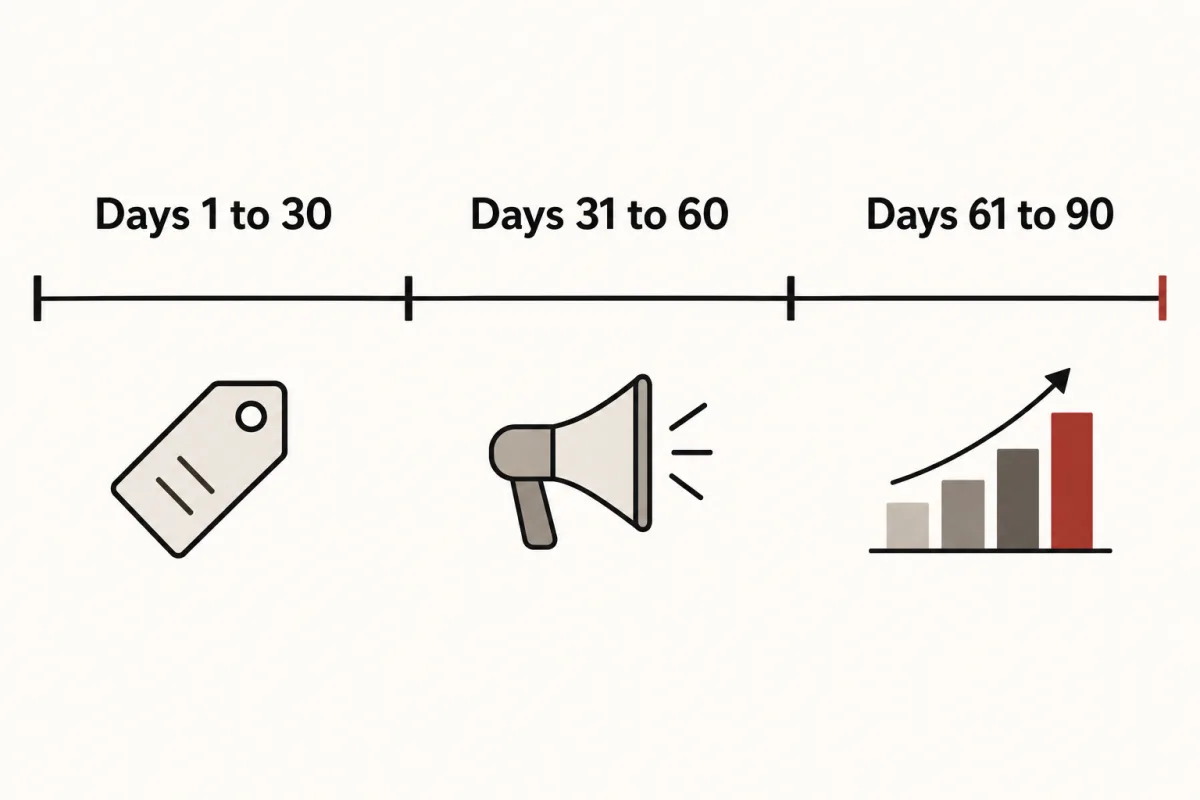
- Days 1 to 14: pick the offer and fix the listing. Write your one front-end offer in one sentence with a price. Complete your Google Business Profile. Add the source field to your booking software.
- Days 15 to 30: start asking. Ask every patient for a review and a referral at checkout. Set up confirmation and reminder texts. Send one email to past patients with the offer.
- Days 31 to 60: turn on paid social. Run Instagram and Facebook ads for the one offer. Decide where the click goes and who answers. Check booked consults every week, not every day.
- Days 61 to 90: review and decide. Count booked consults, attended consults and new paying patients by source. Keep what produced booked consults. Cut or fix what did not.
Frequently asked questions
What digital marketing works best for a med spa?
Paid social for new patients and Google Business Profile for people already searching, in that order for most small clinics. Which one wins for you depends on your market and your offer. Paid social moves fast. Local search is slow but brings people who already want the service. Run both and fund the one that fills the calendar.
How many med spa marketing ideas should I run at once?
One new acquisition channel at a time, on top of the basics: listing, reviews and reminders. A small clinic has one person handling marketing. Spreading that person across five channels means none gets fixed. Get one channel to produce booked consults you can trace, then add the next one.
Do I need an agency for med spa marketing?
No. A small clinic can handle the listing, reviews, email and referrals in-house. The channel most owners hand off is paid social, because the ad images, the ad account and the DM replies take time every day. If you do hire help, ask who turns the inquiry into a booking and what you are paying for.
You can run most of these channels yourself. If you want help with paid social, read how to choose a med spa marketing agency first. Bring its questions to any call, including ours. Ryder Scale has no retainer and you pay per qualified booked consult, so book a free 20-minute audit to see whether that fits your clinic.